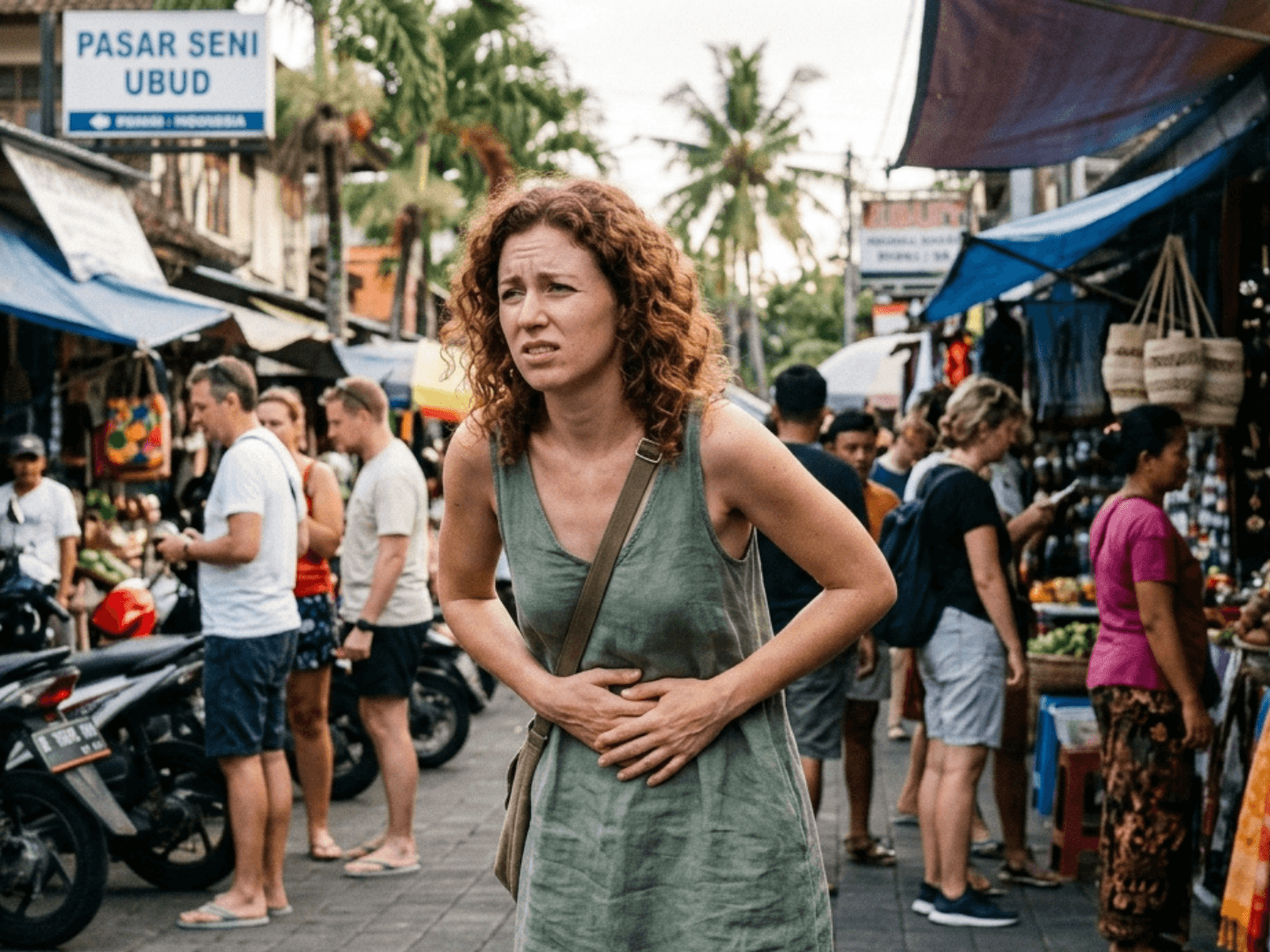
Bali Belly or Traveler’s Diarrhea? What Travelers Should Know
You may have heard travelers call it “Bali Belly.” The term is commonly used for digestive problems that happen while traveling, particularly diarrhea, stomach cramps, nausea, or vomiting.
But Bali Belly is not a specific medical diagnosis. Traveler’s diarrhea can have different causes, including bacterial, viral, or parasitic infections. Sometimes, digestive symptoms can also happen for other reasons.
So rather than immediately trying to figure out exactly what caused it, start by paying attention to how you’re feeling and how your symptoms are changing
What Is Bali Belly?
“Bali Belly” is a popular term travelers use when they develop diarrhea or other stomach problems during a trip to Bali.
In medical terms, one possibility is traveler’s diarrhea, which is a clinical syndrome that can result from different intestinal pathogens. Bacteria are a common cause, but viruses and parasites can also be involved. [CDC]
This is why it is difficult to say that every case of diarrhea in Bali comes from one particular food, drink, or ingredient.
You may experience:
- Loose or watery stools
- More frequent bowel movements
- Stomach cramps or discomfort
- Nausea
- Vomiting
- Feeling tired or weak
- Fever in some cases
Symptoms can vary depending on the cause and the person.
Why Can Diarrhea Happen While Traveling?
There can be several reasons.
Changes in Food and Routine
Travel often means eating foods that are different from what you normally eat, eating at different times, or changing your daily routine. A change in diet does not automatically mean you will develop diarrhea, but your digestive system may respond differently to new foods, eating patterns, or other changes during a trip.
Exposure to Different Germs
Travelers may encounter bacteria, viruses, or parasites through contaminated food, water, surfaces, or contact with other people. Food and water hygiene can reduce the risk, but they cannot eliminate it completely. The CDC notes that even travelers who follow food and water precautions can still develop traveler’s diarrhea.
Food Safety and Hygiene
Food that is not properly cooked, stored, or handled can carry germs that cause gastrointestinal illness. Simple precautions can help reduce your risk, such as choosing food that is thoroughly cooked and served hot, drinking safe water, washing your hands before eating, and being careful with raw foods when you are unsure how they were prepared.
But there is no need to assume that every meal outside your usual diet will make you sick.
What Should You Pay Attention To?
If you have diarrhea while traveling, it is easy to focus only on how many times you've been to the bathroom.
But there is more to consider:
Can You Keep Fluids Down?
Diarrhea causes your body to lose fluids, and vomiting can increase fluid loss further. Being able to drink and keep fluids down is important because dehydration can become a concern when fluid losses continue.
For more on recognizing dehydration, you can also read our guide: [Dehydration in Bali: Signs, Symptoms & How to Prevent It].
Are Your Symptoms Getting Better or Worse?
Pay attention to the direction your symptoms are taking.
Are you having fewer episodes of diarrhea?
Are you starting to feel more comfortable?
Are you able to eat and drink more normally?
Or are your symptoms becoming more severe?
Sometimes, the change matters as much as the symptom.
If your condition is clearly getting worse rather than improving, it may be time to seek medical advice.
Are You Experiencing Other Symptoms?
Diarrhea can occur with other symptoms, including abdominal pain, nausea, vomiting, or fever. The combination of symptoms matters. For example, diarrhea accompanied by blood in the stool, high fever, significant dehydration, or persistent vomiting requires more attention than a mild case that is already improving
What Can You Do If You Have Diarrhea in Bali?
For mild diarrhea, the main priority is replacing the fluids you lose.
1. Drink Fluids Regularly
Keep drinking fluids throughout the day. If you are vomiting, taking small, frequent sips may be easier than drinking a large amount at once.
2. Give Your Body Some Rest
You don't have to continue sightseeing just because it is already on your itinerary. Resting for a while can give you time to see whether your symptoms are improving. If you are feeling weak or dehydrated, avoid pushing yourself through long walks, strenuous activities, or extended time in the heat.
3. Eat When You Feel Able
You don't necessarily need to stop eating completely. When your appetite returns, you can gradually return to foods that feel comfortable for you. If certain foods seem to make your symptoms worse, it may be sensible to avoid them temporarily while your stomach settles.
4. Be Careful With Medication
Some over-the-counter medicines can reduce diarrhea symptoms in certain adults. However, they are not appropriate for every situation. Whether they are appropriate depends on the severity and likely cause of the illness, so it is best to discuss their use with a healthcare professional.
When Should You See a Doctor?
Many cases of traveler’s diarrhea are mild and improve without specific treatment. However, some situations need medical assessment.
Consider seeking medical advice if:
- Your diarrhea is severe or getting worse
- You have blood in your stool
- You develop a high fever
- You are vomiting frequently and cannot keep fluids down
- You have signs of dehydration, such as very little urination, a very dry mouth, or dizziness when standing
- Your diarrhea continues for several days without improvement
The CDC specifically recommends medical attention for severe symptoms such as bloody diarrhea, diarrhea lasting more than three days, high fever, frequent vomiting that prevents keeping liquids down, or signs of dehydration.
If you are unsure about your symptoms, you don't have to wait until they become severe before asking for medical advice.
Can You Prevent Bali Belly?
There is no way to guarantee that you will avoid traveler’s diarrhea, but some habits can help reduce your risk.
1. Choose Food Carefully
When possible:
- Choose food that is thoroughly cooked and served hot.
- Be cautious with raw or undercooked foods.
- Choose fruits that you can peel yourself.
- Be careful with food that has been sitting at room temperature for long periods.
2. Pay Attention to Drinking Water
Choose water that is known to be safe or properly treated. If you are unsure about the source of drinking water or ice, choose a safer alternative.
3. Wash Your Hands
Wash your hands with soap and water, particularly before eating and after using the bathroom. If soap and water are not available, alcohol-based hand sanitizer can be useful, although handwashing is preferred when hands are visibly dirty.
Don't Just Blame the Food
If you develop diarrhea in Bali, it can be tempting to immediately think:
“What did I eat?”
Food and water exposure can certainly play a role, but traveler’s diarrhea has multiple possible causes.
More importantly, focus on how you are feeling now.
Can you drink?
Can you eat?
Are you able to rest?
Are your symptoms improving?
Or are they becoming worse?
These details can be more useful than trying to identify one meal as the cause.
Bali Belly: When to Take a Closer Look
A mild stomach problem that is already improving may simply need time, fluids, and rest.
But if your symptoms are becoming more severe, you cannot maintain your fluid intake, or you notice warning signs such as blood in your stool or a high fever, it is better to seek medical advice rather than continuing to manage the symptoms on your own.
And if you're simply not sure what's going on, it's okay to have it checked.
Need Medical Advice During Your Bali Trip?
UbudCare provides medical consultations for travelers in Bali, with 24-hour medical services in Ubud and Canggu. Depending on your situation, medical assessment can help determine whether you need further treatment or testing.
If you're staying in a hotel or villa and don't feel well enough to travel to a clinic, UbudCare also provides on-call doctor and home visit services in supported areas.